


It is important at Karnes Electric Cooperative, Inc. to maintain reliable electric service to our members by keeping trees and other vegetation clear of power lines and equipment. Moreover, it is crucial for members to have their contact information up-to-date in order to receive notifications regarding vegetation management work near their location.
What is vegetation and how does it cause power outages?
Vegetation refers to all plant material such as trees and shrubs. As vegetation grows near or onto power lines and electrical equipment, it can disrupt the flow of electricity leading to power outages and unreliable service.
How KEC will assess and manage overgrown vegetation
In order to provide safe and reliable electrical service, KEC will inspect the vegetation on site to determine the severity of overgrown vegetation. Depending on the result of the assessment, KEC will either trim/remove trees and shrubs that pose a risk to power lines and equipment, or have qualified professionals handle the clearing and herbicides. KEC crew may also clear overgrown vegetation on an as-needed basis during the course of other work and outages to control and limit regrowth of cleared vegetation.
This important work helps keep trees and vegetation safely clear of power lines to reduce outages, increase public and employee safety, and improve service reliability.
Additionally, it is important for members to have up-to-date contact information, as they are notified by emails, phone calls, and letters before work occurs in areas near their location.
What members should do to report vegetation concerns
Report vegetation concerns near power lines to KEC by contacting us and having the following information ready:
- Provide account number, meter number, and pole number.
- Provide exact address of location.
- Provide any gate codes for access to the property.
- Always ensure that your email address and phone numbers on file are up to date.
- Never attempt to trim or remove trees near power lines yourself.
- Call 811 dig before digging to locate underground utilities.
Tree planting and other necessary information
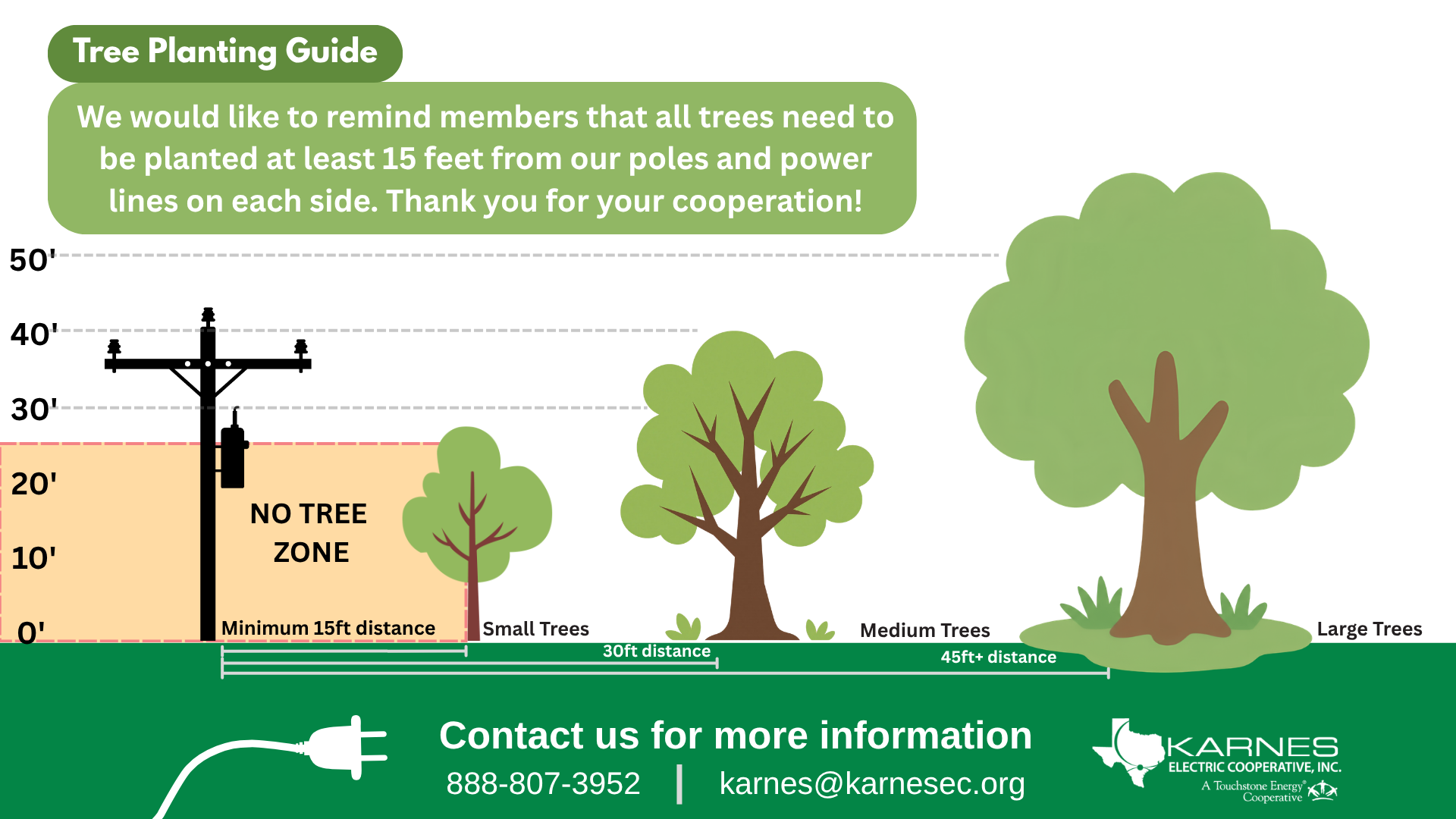
The best way to avoid a potential vegetation issue with power lines or electrical equipment is to minimize the risk of interfering with electrical equipment:
- Consider low growing trees and shrubs which are less likely to cause an issue.
- Call 811 or visit 811beforeyoudig.com to ensure safety, compliance with local laws, and prevent costly damage to underground utilities.
- Avoid planting vegetation that will limit access to power lines and electrical equipment. This will help utility crews to better maintain power lines as part of routine maintenance and restore power during storm events.
- Before planting, think about how tall and wide a tree will grow at maturity — not just how it looks today.
No Tree Zone:
Avoid planting directly beneath power lines. This space should remain clear to prevent future safety hazards and service issues.
Small Trees (under 25 feet tall):
Plant at least 15 feet away from power lines.
Medium Trees (25–40 feet tall):
Plant at least 30 feet away.
Large Trees (over 40 feet tall):
Plant at least 45+ feet away.
Large-growing trees such as oak, pecan, pine, sycamore, and cottonwood should never be planted near power lines.
Trees grow taller and wider over time. Planning for their mature size today prevents future trimming concerns and helps protect reliable electric service.
Important Safety Reminders
Members of the public should never attempt to clear trees from around power lines. Remember that electric utility lines carry voltages that are many times greater than the standard household voltage. Both primary and secondary lines have the potential to severely injure or even cause death if someone comes in contact with them, either directly or indirectly.
Should you have any questions about vegetation management, KEC is here to help!
Email: karnes@karnesec.org.
Phone Number: 1-888-807-3952